Monday, May 27, 2013

"Fast and Furious 6" Review: Or Universal's Muscle Engine That Could


So let's address the elephant in the room: we know these are not intelligent movies. We know that Universal's venerable Fast franchise, since the second movie, has basically been geared towards audiences looking for brainless summer entertainment where people go into an air-conditioned theater, and watch 'splode-y things happen in a cliched action movie. But it's that self-awareness that allows this franchise to continue its success. Director Justin Lin and the cast know what these movies are and what the expectations are. So it ultimately becomes quite pleasantly surprising when things become more ambitious than what we expect.

And ambition is what we get. Yes we have a TON of random car race scenes set to whatever the most popular genre of top 40 music is nowadays. And yes we have some of the most ridiculous scenes you'll ever see in an action movie this year (let's say it involves 2 people being catapulted from standing on top of a car and a tank, and flying across a gap between 2 sides of a freeway). But in between, we also get a bit of drama, character  development, and franchise story progression here and there. It's not Shakespeare, but if nothing else, we can tell the filmmakers are really really trying here. 

The plot is, naturally, simple. Hobbs (The Rock) is tracking down an international thief named Shaw (Luke Evans) who is looking to steal some billion dollar microchip that will enable him to black out electronic devices all over the globe. But Hobbs needs "wolves to catch wolves" so he tracks down Dominic Turretto (Vin Diesel) and Brian O'Connor (Paul Walker) and their team of merry men to drive fast cars and take down Shaw and his team, which are essentially doppelgangers of the good guys (as Tyreese's Roman Pierce so humorously points out halfway through the film). True, plots don't really matter in movies like this. But interestingly enough, the filmmakers have managed to tie this installment heavily into the previous films--which is not something I'd expect in such a franchise. Dom's whole motivation for doing this for Hobbs is an opportunity to save his one-true-love Letty (Michelle Rodriguez), resurrected from her supposed death in the  4th film. This ultimately allows for the movie to re-explore the main villain in the 4th movie, as well as previous scenes that happened in that film, ultimately even improving elements of that film. In fact, the film even also revisits Tokyo Drift (the third movie), in one of the subplots involving Han (Sung Kang) and Giselle (smokin' hot Gal Gadot), which culminates in a delicious tag scene involving...I've said too much.

But my point is, it takes a lot of planning and strategy to take events and characters that happened in previous movies and attempt to construct and tie them into elements of a popcorn movie, to make this popcorn movie a relevant entry in a franchise. And that's what director Justin Lin and writer Chris Morgan have done with both "Fast Five" and "Fast and Furious 6." If nothing else, they deserve credit for really trying  here, when they could easily just coast along with simple explosions and CG car chase scenes. They've actually thought things out, and attempted to tie up lose ends and develop their characters--even minor ones, like Elena, Dom's cop-turned-girlfriend from Fast Five--between various installments of the franchise. And for someone like me, who expects very little from this franchise, that's pretty impressive and surprising.

The acting's not great. The dialogue is clunky. Vin Diesel snears and growls through lines that alternate between badass, or cheesy pick-up lines. Paul Walker's cardboard as ever as the bonde Keanu Reeves. But the supporting cast is pretty fun to watch overall. Dwayne Johnson--screw it, I'm going to continue calling him The Rock--The Rock is very entertaining as Hobbs, but he gets a little mushy here essentially becoming Dom's BFF, who's so full of respect for him. If nothing else though, The Rock puts a lot of charisma in most of his roles, and this is no exception, veering between comedic and tough through the full movie. Tyreese gets most of the laughs as goofy-idiot driver Roman Pierce. Ludacris gets some entertaining screentime as Dom's team's techie. And the newest additions, kickboxer Gina Carlo and British up-and-comer Luke Evans get some good moments as a hard-ass cop and a slimy menacing villain respectively. 

But let's be honest, you're attending a Fast movie for the action--not the script or the acting. And it is ridiculous, bombastic, and bone-crunchingly fun in this. You have a ton of really great fights including 2 with Gina Carlo and Michelle Rodriguez, and a tag team battle with Vin Diesel and The Rock vs. Luke Evans and a big muscular version of Hobbs. There's about 4 crazy chase scenes (a Dom vs. Brian race; one scene involving Dom's team pursuing Shaw's team, with modified F1-racers with ramps; one scene with a tank; and one race between Letty and Dom). And one final ginormous set piece involving cars taking down a giant plane. It's all silly, over-the-top, and ridiculous and all defy the laws of physics. But hey, I failed physics, so who really cares as long as it's all fun, right? Just turn your brain off and enjoy the "ooohs" of audiences being entertained by the WWE-inspired fights.

But when it's not about the action sequences, we actually do have scenes of genuine sentimentality and character evolution--Brian is dealing with fatherhood, and guilt over being partially responsible for Letty's "death", Dom is dealing with the shocking return and determination behind rehabilitating Letty, Han and Gisselle are contemplating settling down, Letty's wondering who to trust and what she wants in a family--it's all pretty interesting that Chris Morgan is writing these characters, and considering their feelings and emotions and motivations. These are not the characters we saw in the first Fast movie, which is sort of fascinating, if you think about it. It's not usually just doing things for the sake of doing things--even if no character actually takes any pauses to consider their actions, and even if none of it is subtle. This is worlds better than, say, for example, the evolution of a character like Captain Jack Sparrow from the Pirates franchise, who has essentially remained the same in 4 movies. Is it perfect? No. But it's more than we should expect in this franchise.

There's a good chance that my high review for a movie like this is entirely dependent on lowered expectations. But perhaps that speaks more as a flaw in the skepticism most critics have in popcorn movies than it does the merits of the movie or the crew behind it themselves. I understand the Fast franchise is not to be taken seriously in the eyes of most serious moviegoers. But perhaps we need to give it more credit since the filmmakers actually attempt to care about the stories of these characters (if not the single stories of the films themselves). And that is one of the key points of storytelling is loving and respecting your characters enough to help them grow--even if the circumstances they grow under are shallow and superficial. But if you can manage to do that in addition to entertaining me with visually engaging action scenes, then more power to you. In short, is this franchise or this movie perfect? Absolutely not. But it's serviceable for sure, and (dare-I-say) welcome and enjoyable--moreso than most of the terrible, soulless movies directors like Michael Bay produce. And that's because this little engine called the Fast franchise, thinks it can and aspires to accomplish.

Overall Rating: B+

Thursday, May 16, 2013

"Star Trek Into Darkness" Review: My Name Is...


2 really big movies in, and it's completely shaping up to be a controversial, twisty summer for fanboys everywhere. Given the reveal of "The Mandarin" in "Iron Man 3", "Star Trek Into Darkness" follows a very similar suite by taking a classic villain of fanboy mythos and transforming him into something reasonably different. And based on a few reviews from cinephile sites, it sounds like not everyone is happy. I'm fairly pleased to say though, that this particular fanboy, ladies and gents, liked what he saw...mostly anyway.

Now granted, take that with a grain of salt, because I may not take JJ Abrams' reinterpretations to heart as much as many other hardcore folks online might. If I were to classify myself as any sort of Trekkie, I'd honestly say casual at best, only really devoted to Next Generation and (so far) the Abrams franchise. I have seen the original movies, and I know enough about the mythology to get by without being murdered for complete ignorance at Comic Con. Given that, I'm not nearly as offended as many geeks out there seem to be, so if you're reading this and you're a hardcore Trekkie, don't gauge my eyes out for giving it a good rating. 

Overall, this was a fun, exciting movie. In fact I has slightly less problems with this one than I did Iron Man 3. But that doesn't mean it doesn't have its share of issues. More on those later.

The basic premise of the film goes as follows: A bio-genetically engineered man named "John Harrison" ends up attacking the Starfleet senior officers, killing an important character in the process. In search of retribution and justice Kirk, Spock, and the rest of the Enterprise crew go on a manhunt for him. They are able to capture him. However this all ends when Kirk finds that one of the higher officers of Starfleet has not told him the entire truth about "John Harrison", and discovers a few more frightening things about the character, including what he wants. Then the film turns into an all-out war between the Enterprise, a second Starfleet vessel and "John Harrison."

First, let's discuss, perhaps, the movie's 2 greatest assets: Zachary Quinto as Spock, and Benedict Cumberbatch as...er..."John Harrison". Those who have seen the really fantastic 2009 film are probably already sold on Quinto's Spock, as he did a magnificent job in that film. I'm happy to report that he continues the trend here. Spock is conflicted much of the time, never knowing whether or not to make the logical choice or the right one. He's learned to chill a little more since the first movie, and Quinto plays the role he inherited from Leonard Nimoy with total conviction. You really buy into Spock's motivations, why he feels the way he feels, why he does the things he does. For me he is the linchpin of this entire vision of the franchise. As for Mr. Sherlock Holmes himself, Benedict Cumberbatch takes what he can with a fairly under-written role (i.m.o), and elevates it magnificently in the time that's given to him. His villain is devious, intense, and far more interesting than some of the other characters in the Enterprise crew--or at least would even be more interesting had his role been larger. And all of this is done simply with strong vocal intonation, calculating intensity, inflection, cold eyes, and callousness.

On the topic of performances, by the way, I'd also like to point out that the "always welcome" Simon Pegg deserves praise too. His Scotty provides some much needed comic relief to the film--then eventually plays an even much larger role in this film (especially towards the end) than he ever did in the original movie.

Now, the action sequences and set pieces are also quite breathtaking, and the movie is pretty relentless with these scenes. We break every moment we get to breathe with a legitimately well filmed, tension-filled action scene. My particular favorite is a sequence in which Kirk and "John Harrison" are flying through space to try and make it into a very tiny spaceship door while having to avoid floating debris. There is also a great fight/chase scene towards the end between Spock and "John Harrison." Watching all of this unfold on IMAX 3D, by the way, is incredibly worth it!

Now for the twist. I daresay, without spoiling anything, I very much enjoyed the reveal of who "John Harrison" really was. It's predictable, sure. And fanboys complained that this was mostly fan service. But I can honestly say I bought into it--mostly because Cumberbatch is such a fantastic performer. When the reveal happened, my audience, a wide selection of hardcore and casual Trekkies clapped happily. And naturally, what the character's identity really is ends up driving the story forward. Many fanboys took issue with this, stating that it would be ruining the previous incarnations of this character. But frankly, who cares what they think? This is a NEW Star Trek parallel universe. Anything goes here. And bringing a familiar character to the table that may not 100% resemble the character's counterpart from previous Star Trek entries is acceptable in my book.

Now for some of the problems...

First off the writing for the film really isn't perfect. In fact, I took issue with a subplot containing a secondary villain, which I felt was generally unnecessary  I'd wager that you could have the "John Harrison" storyline drive the film without need for any distracting garbage concerning Admiral Markus. Yet it's still a significant part of the story. Why is that? My guess is--they had to fill the time somehow. 
But hey, congrats to Paramount because mission accomplished there. Additionally, Cumberbatch's character "John Harrison" really ends up not having too much to do until after the team lands on Chronos. We hear 1-2 lines about the characters motivation, but frankly it's not enough for us, as the audience, to really understand or identify with his feelings and thought process. It ultimately made the character slightly weaker since there's not a whole lot else revealed about him during the movie. Additionally, there's also a 3rd subplot--the looming threat of a war with the Klingons--that goes absolutely nowhere.

There are also some problems with predictability. Certain scenes, the writers will have a character literally call out an important detail just so that we catch it in time for it to be referenced in the movie later on. The problem with this is that we end up knowing these elements are all going to come into play sooner or later, and therefore, the surprises end up lost because we can see them before they happen based on unsubtle details. (Particularly a scene involving a vial of blood).

Another major problem I had was that outside of Kirk, Spock, Scotty, and to a far lesser degree, Bones and Uhura, the crew we grew to love in the first film has practically nothing to do in this film. In fact one of the best qualities in the previous film was that everyone got their moment to shine. No such luck for "Into Darkness" sadly.

I also must admit, I was not taken by Chris Pine's Kirk this time around. The way Kirk was written in this film makes him look gullible, overly brash, and foolish. Furthermore, it was hard for me to take any of the more dramatic scenes seriously, since Pine's tendency to overact comes out--especially during crying scenes. And unfortunately, in this film, there are scenes where dramatic weight Pine just doesn't have, are required. Next to more subtle actors like Cumberbatch and Quinto, he grossly pales in comparison. And overall that's a shame, since this entire story, from the 2009 film to now, has basically been  told through Kirk's eyes. Kirk should be the anchor of a Star Trek movie (being the captain and all), but he ends up lacking in the end.

However, to end on a high note--A few more things I did like:

The score by Michael Giacchino is top notch. I found myself humming the Star Trek reboot theme as I left the theatre. However his score really does influence the effect certain scenes had on me, so kudos for that. The visual effects in the film are also very, very good. Everything looked really shiny and reallistic.

I also applaud JJ Abrams for his overall kinetic energy and pacing with these films. He directs each scene with a sense of fun and tension, ultimately making you care about the situation. And visual landscapes of future San Francisco, and desolate Chronos are quite stunning. Furthermore, Abrams is able to get a few emotional moments out of film, but I'd say they had a less personal impact on me than when he's giving us his action (primarily due to some overacting here and there on Pine's behalf). Fair warning though: You will see a great deal of lens flare throughout the movie.

I also very much like how the writers and director are definitely keeping this franchise firmly grounded as both a sequel to previous films and a reboot at the same time. There's one scene--a fun, little cameo--the directly references the events of a previous film that happened before the reboot. Despite this entire franchise being a reboot, we are explicitly cannon here folks, and that in and of itself is a very interesting notion. In fact, despite the presence of Spock Prime in the original movie, only a handful of call outs were made to the original continuum in the first film. In one scene here, we get an official callout to the previous events in the previous movies, and it's rather interesting how that plays out.

Now overall, I honestly don't think this is better than the 2009 film. That one was fun, easy to understand, and well-acted. But, in spite of its flaws, I do believe this was a fun, exciting romp with amazing performances, and less plotholes than Iron Man 3 (even if the villain and his motivations are largely ignored). I enjoyed myself immensely, getting sucked into the drama, the tension, the situations, and the creative spins on elements of classic Trek mythology. If you get a choice to "boldly go" to the movies to see this Trek, then make it so! You won't be sorry.

Overall Grade: A - 


Friday, May 3, 2013

"Iron Man 3" Review: Different Suit of Armor, But Still Quite Good

"Ooooh it's good to be back!" But is Tony Stark truly back? In the hands of Shane "Lethal Weapon" Black, we actually get a very different Iron Man movie than the last 3 outings (include The Avengers). Does it pay off? Mostly yes. I'll get to the gripes in just a bit. But for now, welcome to Marvel Phase 2 everyone.

First thing's first, I gotta say, it's just awesome to be back in the Marvel Cinematic Universe. After last year's amazing Avengers, all I've wanted to do is see what happens next. And here and there we get some fun references in this. But mostly, Black wants and gives us a self contained story. Based on the Extremis arc in the comics, 3 basically introduces Cinematic Universe patrons to Maya Hansen and Aldrich Killian, and their attempts to create and harness the Extremis virus to tap into the potential of the human brain to activate areas that could essentially turn people into superhuman soldiers. Unfortunately, it has literally explosive results, which are utilized by The Mandarin as terrorist attacks all over the globe--one of which places Happy Hogan in the hospital, and makes it personal for Tony. Tony's brashness then lands him in hot water as he threatens The Mandarin and gets his house, pretty cars, and pretty suits (to a lesser degree) blown up, as well as endangering Pepper's life. Without any help and a long way from home, Tony's forced to rely on his wits and will to get to the bottom of the mystery behind who The Mandarin really is, where to find him, and what his connection to the Extremis program is.

To give credit where credit is due, Shane Black and co-writer Drew Pearce really try to emphasize story over fan-service here, which becomes incredibly controversial (I'll get to that later, I promise). In a moment of pure brilliance, we are seeing Tony, a seemingly invincible character, as we've never seen in 3 movies, being put through the ringer to the point where it doesn't matter if his suit's on or not--we still fear for his life. And this is a significant challenge, because where can you really take a character that has beaten an entire army of aliens and giant metal space eels, and still make it seem like he's in danger? Somehow Black and Pearce manage to pull it off with a very menacing threat to Tony and the gang, so major kudos for that. It's also very interesting and understandable that Tony would have PTSD, given the events of The Avengers, and it adds a lot to his character and how he's changed since the first Iron Man.

The performances, for the most part, the anchor of the movie! Downey, of course, owns the screen, whether he's delivering the snidest of remarks to a 12 year old kid, or trying to overcome a villain who can physically best him, we are dealing with a master conductor at work, leading an equally powerful ensemble. Downey knows this character inside and out, and after 4 movies, still manages to make him interesting and funny through self-discovery and continuous evolution.  Right below Downey is Guy Pearce, who brings an incredibly twisted, sinister approach to his portrayal of Aldrich Killian. Unfortunately, not everyone in the cast is given their due. Gweneth Paltrow's Pepper Potts is really underutilized here only as a damsel in distress. This is a real pity given how enjoyable it was to see her in Joss Whedon's vision during Avengers. Don Cheadle is also not given as much to do, other than to play the buddy in the buddy cop duo of Stark and Rhodey. The Iron Patriot suit itself is used quite nicely, but sadly not its pilot. And lastly, Rebecca Hall is pretty wasted as Maya Hansen. There's a decent (albiet predictable) twist with her character, but at the end of the day no one really cares much about her because she's reasonably 2-dimensional overall.

Now let's get to the elephant in the room: Sir Ben Kingsley. People will be lining up to see Iron Man go toe-to-toe with The Mandarin. And what they'll get is a great performance...with a very very disappointing payoff. Sadly Shane Black's interpretation of The Mandarin is very disappointing. Many were saying that Kingsley's performance would be on par with Ledger's sinister Joker from The Dark Knight. We get a glimpse of how that could be possible--excellent vocal intonations and a pure ruthless look in his eyes-- only to have it ultimately ruined by the final direction of where Black takes the story and The Mandarin character. On one hand, it is a very ballsy move to take a beloved superhero arch-nemesis, and take the focus off of him to complete the story you want to tell (and it's not a bad story overall--plus Black gets points for sheer commitment to it). But it's definitely at the cost of taking a classic character and, well (excuse the vulgarity) pissing all over it. Which leaves me conflicted overall, because you set up a good character with a great performance only to ultimately disappoint with a twist that's slightly stupid. I admittedly like my fan-service.

Now the action and VFX in this movie is fantastic, as we do get a TON of really excellent, edge-of-your-seat sequences. Everything kicks off with the explosive destruction of Tony's Malibu penthouse, then we later get some great fights with Tony against the Extremis soldiers WITHOUT his armor, to another fantastically brilliant scene where Tony's only got a repulsor guantlet, and uzi, and rocket boot on that Black manages to make incredibly unique and entertaining, and of course 2 really showstopping finale sequences involving an Air Force One rescue and "Operation House Party," with Tony's army of suits. And for the record, the Mark 42 kicks so much ass!

Additionally, the movie has some very funny moments, which only become funnier because of our familiarity with Tony's character. The entire back and forth between Tony and a kid who helps him out in Tennessee is incredibly fun--particularly in how much of a lovable ass Robert Downey Jr. can make Stark. There's also some really great sight gags, like a ginormous random stuffed rabbit, and a hilarious nod to A Christmas Story. If Black is good at anything it's snappy one-liners and moments of goofiness that work in an action movie.

However for each of these brilliant scenes we are treated to the occasional stupidity. Aside from the character of The Mandarin, the movie is pretty guilty of some severe plot holes. For example--Tony Stark, in Iron Man 1 built the Mark 1 Iron Man suit in a day, in a cave with a box of scraps. In this, he has more resources at his disposal around Home Depot, and yet, the best he can come up with are a few trick smoke bombs and a taser? You've gotta be kidding me. Also, we can deploy a million Iron Man suits to attack an oil tanker, but you can't call just 1 to pick you up and take you somewhere when you are stranded the way Tony is in the movie? Huh? On occasion, Black also has a tendency to really slip a lot of the cheese from 80s action movies into the film. One particular scene at the end, when a character comes back from the dead for one last hurrah is so predictable and cheesy, that it simply reminds you of villain moments in the Lethal Weapon franchise. At one point, when I saw Rhodey and Tony sneaking around a shipyard with guns ready, I even immediately thought Riggs and Murtaugh. This makes for a different feel than we're used to with the Iron Man franchise, which both works and doesn't work. It works that we get to see Tony getting out of situations without having to rely on the Iron Man suit all the time and sets it apart from the other movies. But at the same time, this is not Lethal Weapon we're talking about here--nor is it 1984. We, as an audience in the 2000s, came to see Robert Downey Jr as Iron Man--not Robert Downey Jr as Iron Man: The Buddy Cop star doing all the things people do in a cheese fest 80s action movie.

But I digress. Things like the plot holes in the above paragraph are but minor quibbles that are forgivable in a movie that has more pros going for it than cons. And while I take issue with a few things--especially The Mandarin-- I only do so in the sense that I am a biased fanboy and tend to be over-educated in comics and thus over-critical when elements are overlooked. Because on the whole, thinking about it, this is definitely a fun, entertaining movie. It's not perfect. It's not as good as The Avengers, or even the first Iron Man. But there's a lot to love and a lot that will put a smile of enjoyment of your face when you see it for yourself--particularly in the acting, the humor, and a fairly interesting, capable story.

Also stay through the credits for a very funny cameo ;).

Til the next summer blockbuster hits, folks!

Overall Rating: B+

Thursday, March 7, 2013

"Oz the Great and Powerful" Review: More Like Oz the Okay But Overly Familiar


In 2010 Tim Burton's "Alice in Wonderland" made a billion dollars and opened the flood gates for all sorts of "dark fairy tale knockoffs" for kids. "Alice" itself was a rather mediocre disappointment, and it unfortunately yielded even worse films like "Snow White and the Huntsman" and "Red Riding Hood." In that tradition, comes the slightly better "Oz the Great and Powerful."

The film, like "Alice" and "Huntsman" was produced by Joe Roth. And the biggest problem for me is the fact that ALL of Roth's fairy tale adaptations follows the EXACT same formula: The land of "__insert mystical land__" was once a happy place until "___insert villain name____" came along and turned it into a dystopia. But there's a prophecy that "___insert hero name___" will come along and save the kingdom. The problem is "___insert hero name____" does not want to be the hero the land of "___insert mystical land____" needs. Along the way "____insert hero name_______" meets some kooky friends and soon realizes their full potential, defeats "___insert villain name_____" and saves the land of "____insert mystical land_____".

See what I mean? It's literally the exact same formula that has repeated itself in every fairy tale movie Roth has produced behind some visually stunning director. And unfortunately, "Oz" doesn't attempt to make things any more original. Which is a big waste considering the visuals are great, the acting (for majority of the cast) is good, and the fantastic direction by Sam Raimi deserves more.

Nevertheless, those 3 aforementioned strengths are just minimally enough to make Oz stand out as a better film than any of the other Roth productions--particularly Raimi's direction. Raimi has a tendency to make various sequences throughout the movie both inventive and charming, starting with a really interesting introduction to the film that harks back to the original "Wizard of Oz" complete with a 35mm black and white small screen. It gives everything a classy feel, but Raimi's not afraid to break those barriers, having elements of the story literally pop out of the frames, taking full advantage of the 3D technology. From there, once you go from Kansas, a small world, to Oz, an enormous, magical, visually incredible land, Raimi expands the frame and changes everything to color to show the expansiveness of the land of Oz, and also to immerse the audience. From there, we get some signature Raimi situations--quick paced crooked camera zoom-ins during horror scenes, rising tension that pauses then is broken by some horror surprise (2 scenes with "witch reveals" call back to some of Raimi's signature "Deadite" reveals from the "Evil Dead" franchise), the obligatory Bruce Campbell cameo--all make you really feel at home, if you're a fan of Raimi's work.

Additionally, the visual effects and the CG-constructed landscapes the team at Imageworks have brought to life are astounding. Oz is simply gorgeous. The minor details like plants, landscapes, building architecture, etc. around the Emerald City, the Munchkin village, and the more savage areas (like the woods, China town, the countryside along the Yellow Brick Road) look very similar to the work done on "Alice in Wonderland" but have a more naturalistic look. I think honestly the production design and art direction are brilliant and original. You really wanted to go there in real life.

Another major strength of Oz, is that, for as weak and cliched as the overall story is, being a prequel, there are a TON of clever twists to the Oz mythology. Some of my favorite scenes involve how Oz actually becomes the floating head in the Emerald City, and how the Wicked Witch of the West became the character she is in the original movie. Additionally, we get references to Oz mythology elements like  scarecrows, talking birds, the Oz guards, etc.We even get to see some very realistic looking, scary flying baboon monkeys. All of this is a fairly original take on these elements. It's just a pity that they're wasted on a flat story. It's a situation where the parts actually end up being greater than the whole.

As far as performances go, the female leads really drive this movie. Rachel Weitz is fantastic and looks like she's having a blast as Evanora, who would become the Wicked Witch of the East. One of the standout moments in the film is the climactic battle between her and Michelle Williams' Glinda, where she transforms into a completely hideous hag, and the two have an exciting battle that looks like something out of the Star Wars prequels (complete with Force lightning). Michelle Williams is also wholesome, sweet, and pragmatic as Glinda. She looks the part, and plays it perfectly, without being completely over-saccharine. But (and I know I'm in the minority here), I was especially fond of Mila Kunis' character and performance as Theodora, who later becomes the Wicked Witch of the West. Most reviews have criticized Kunis as the weak link among the female leads, but to me, she really carried out the pain and naivety of a young lady, scorned by the false hope of love, and ultimately goes madly over-the-top with terror and rage after she is cruelly tricked into her transformation into the Wicked Witch of the West. I must say, one of my favorite scenes is the reveal of her new persona, as she telekinetically throws Franco's Oz around like a rag doll. Additionally Joey King provides a lot of heart as The China Girl who's essentially adopted by Oz and Glinda. And Zach Braff provides some much-needed comic relief into the movie, just straddling the lines between charmingly funny, but kind of annoying (hey it's Zach Braff, after all).

The unfortunate weak link in the entire ensemble, however, is Franco. I know Franco has been nominated for an Oscar before, for his turn in "127 Hours," but in general, I just don't think he's a very strong leading man. His line delivery really flirts with over-campy/corny, and there's barely any charisma there on-screen, for a character that's really supposed to be charming and sleezy, but also sympathetic and brilliant. We get none of that from Franco. The real pity here is that the part of Oz was originally supposed to be Robert Downey Jr.'s. And when you watch the movie, you get why. This is character that's a womanizing, screw up of a man, and a terrible con artist, who is secretly inventive and brilliant, and actually has a heart of gold deep down inside, and will eventually do the right thing--basically it's a Tony Stark. The thing is, Downey is very good at portraying flawed and vulnerable, yet brilliant and hilariously dysfunctional. James Franco, on the other hand, is just not. He's boring and unconvincing. And though he does more here than he did, say, hosting the Oscars in 2011, that's honestly not saying much. We get behind a character like Oz because we know what he's supposed to be through the writing, and not from the on-screen portrayal, which is a definite shame.

At the end of the day, "Oz" hasn't exactly convinced me to get behind the same tired "Joe Roth Fairy Tale Theatre" formula that he's done every year since "Alice" came out. For a movie that's trying to stand out and astonish you, it unfortunately really doesn't attempt to do anything at all to reinvent the wheel, which is both disappointing, and slightly lazy on paper. Fortunately though, in terms of execution,  the movie is enhanced by nice visuals, good direction, and fairly strong performances from most of the cast (with the exception of the one character that should have the strongest performance, but failed). It's just  enough to save an otherwise tired film from falling into the same bland footsteps into mediocrity that its predecessors directly kamikazed into. It's not great--it just simply is alright. And at the very least, better than Spider-Man 3.

Overall Grade: B-

Saturday, January 26, 2013

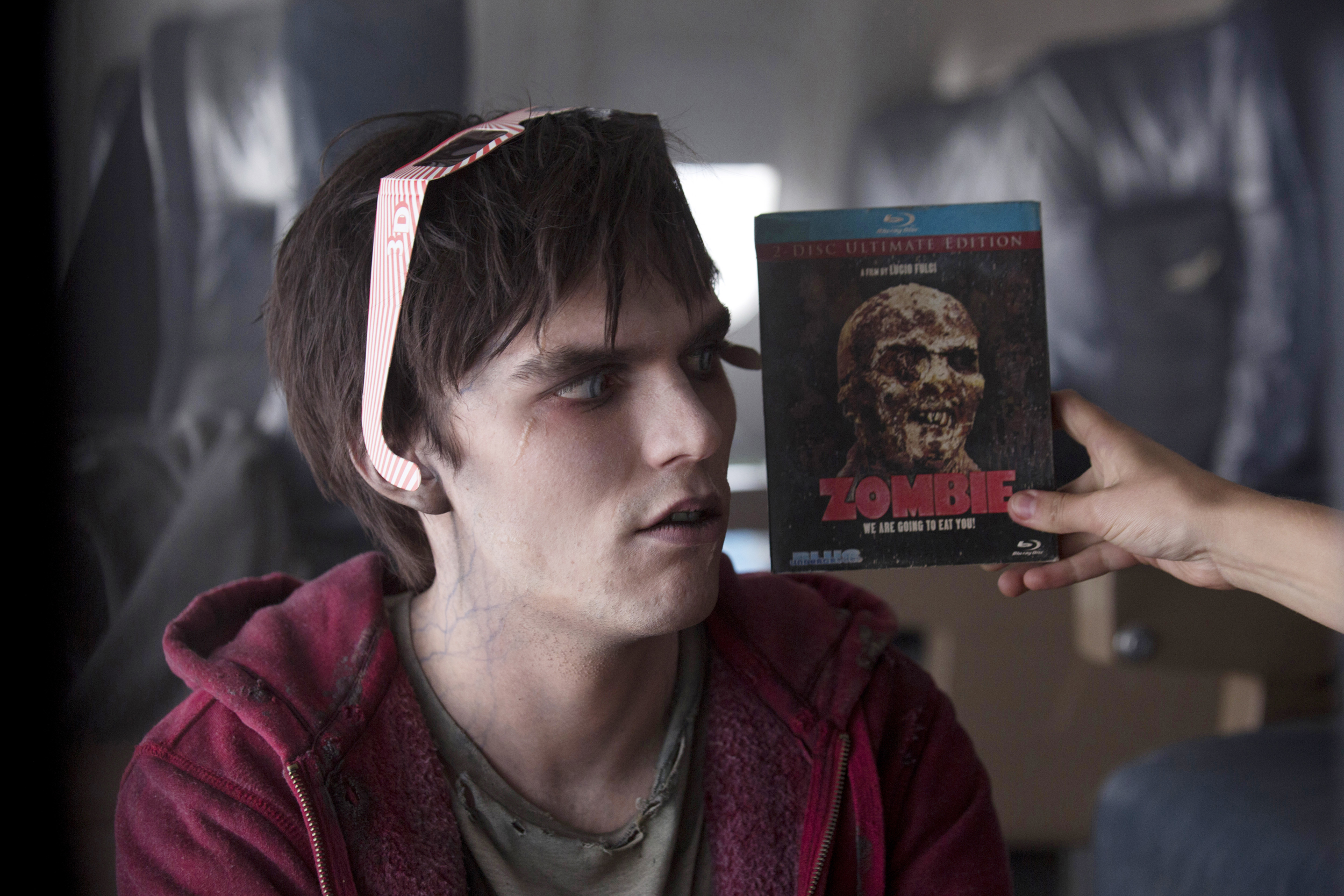
"Warm Bodies" Review: Zombies Gone Hipster


It's not the best zom-com ever made. Certainly films like "Zombieland" and "Shaun of the Dead" take that prize. But, with a razor sharp, relatively inventive script/story, and a great performance from Nicholas Hoult, it's honestly not half bad.

"Warm Bodies" centers on a self-aware zombie, named R (Hoult), who cannot speak or control his urges. He spends his days at an airport, droning, groaning, and invading nearby cities in search of humans for food with the rest of his zombie horde. But, deviating from the rest of the zombie subgenre, the audience is in treated to R's narration. And surprisingly, we find out how remarkably self-aware he is. R feels conflicted about the things he does, he feels emotions, loneliness, appreciates good music and unique relics of the pre-zombie apocalypse world, and above all, simply longs to remember what it is like to be human. Then one day, uncharacteristically, he meets and falls in love with a survivor of the human resistance, Julie (Teresa Palmer), and R decides not to kill her, but rather save her. During his mission to save Julie from some "far-gone" zombies called "Bonies," R begins changing and becoming more human, which causes other zombies to follow in his example, leading to a major change in the war between humans, zombies, and "bonies."

It is a very unusual premise, I know. And the way it sounds, makes it appear Twilight-y. But fear not. It's at least more intelligent. If nothing else, I need to give it mad props for originality and cleverness of the writing. The movie has some funny moments and sharp snark to it--particularly R's entire narration. Hoult's comedic timing and self-conscious nervousness shines through, giving us the closest thing to a zombie Woody Allen (only, you know, more emo) that we've seen in a film. The beginning narration is probably the most smile-inducing moment in the movie, because it's so fresh. It sets you up for the great point of the movie-- giving zombies personality and humanity--and sets us up for the movie's overall theme of exploring what it is and means to be human. R's a well-rounded character. In fact all the zombies are, from R to R's best friend M (Rob Corddry), and beyond. And we are invested in the characters because Hoult and Corddry makes them likable and sympathetic. And the pieces of zombie backstory writer/director Jonathan Levine (50/50) treats you to allow us to identify with the characters and their desire to be human again. Admittedly, yes, you do get a little tired of the fact by the end of the movie, because it gets a little stale given the one-joke premise (insecure zombie), but at least its heart is in the right place.  

As mentioned Hoult and Corddry are great. And as far as other performances go Analeigh Tipton (Crazy Stupid Love) gives the next funnest performance in the film, as Julie's reasonably amusing and funny best friend. But the other supporting performances just aren't up to par with Hoult's anchor of a character. For example, Teresa Palmer is actually quite bland as Julie. Apart from aesthetics, I really don't see what R sees in her character. Also, surprisingly, John Malkovich isn't really anything to write home about either. He's sort of phoning it in as Julie's father, leader of the human resistance against the zombies, who's uncompromising and unwilling to change his beliefs that zombies can change back into humans (uh...when you say it like that, who really could blame him right?). Essentially he's playing the tough-guy John Malkovich, we've seen in all other films he's been in, only in an apathetic sort of way--unlike, say, his fun performance as the paranoid Marvin in Red, or even his own meta-performance as himself in Being John Malkovich. We get bits and pieces of Dave Franco (literally when R sort of chews on bits and pieces of him to feel his memories), and while there's a sweetness to his character, I'm starting to think young Dave is not as versatile as his older brother James. His character's a bit of a sweeter version of the character he played in 21 Jump Street--only, you know, in the zombie apocalypse. There is one scene that contributes a lot of character development to Franco's character, and that's the scene where he's forced to watch his zombie father being gunned down by his girlfriend. The character then changes into a soldier completely. It's a well written change for a minor character, but you aren't able to feel any of it with the way Franco sells it. A bit of a pity, really.

Speaking of "pity," the direction isn't all that great either. Levine has written a fun, interesting script, but he's hardly making things fun on screen. Everything is sort of blandly shot and executed, to the point where, despite the fact that you could feel there's a better movie in the words, characters, and actions, you don't really care much by the end of the film. I left not really feeling or taking very much with me, despite the fact that I initially was enjoying it. In other words, rather than making an impact on the audience with the direction, as Ruben Fleischer did with his visuals and comedic timing in Zombieland, we more or less just shrug "Warm Bodies" off. And there's something wrong with that, because, in essence, this is an original movie that's kind of the first of its own in its subgenre (in terms of having self aware zombies). He also injects heavy, heavy amounts of quirk into the film, which sometimes makes the movie feel like it's trying too hard to be way too offbeat and a little "too cool for school." We have zombies, and they are so cool, they listen to vinyl because "sound...better." Really? Did we need to make our zombies hipsters? (Admittedly, it does have a nice soundtrack though). Again though, there are some pretty funny moments--for example the scene where R watches Julie taking off her shirt while they prepare for bed in an abandoned house, and another ridiculous homage to Romeo and Juliet's famed balcony scene, between R the zombie and Julie. But in my opinion, I think the movie could have used more humor and pathos, and a bit less romance. 

Nevertheless, there's an innate sweetness to the film, and when it's comedic, it's often good material, even if it is trying too hard to be offbeat. The heart and comedy, along with a good, original script, and a great performance by Nicholas Hoult make the film acceptable overall. Though the other performances aren't great, and though the movie doesn't really resonate with you after, I'd say it's still a nice enough little excursion to the theatre on a boring Saturday afternoon (or a Netflix stream if you end up being lazy...I could see this as a good rental movie honestly).  And hey, at least that's more than we can say about most supernatural teen romances, right?

Overall Rating: B

"Gangster Squad" Review: or The "Un-"Untouchables


Back in 2009, Ruben Fleischer made his directorial film debut with one of the best movies in the zombie sub-genre with the refreshingly hilarious and fun Zombieland. Probably my favorite zombie movie of all time. Fleischer treated it with really fun unconventional visuals (like zombie-rules being posted on screen, pianos dropping on zombies, etc.) and the ability to command great chemistry between his ensemble. (Oh yeah. And Bill Murray's brilliant cameo certainly didn't hurt!) Under his guidance, the film garnered a 90%--most of the reviews praising his direction--on Rotten Tomatoes and $102 mil worldwide, on a budget of about $25 mil. It was the promise of a budding, brilliant career from a very strong visual director with a good sense for comedic timing. Fleischer has had 2 movies since Zombieland. And all I have to say is...

What the hell happened???

Between the terrible 30 Minutes or Less and this, I suppose the fanfare was premature. Once upon a time Gangster Squad was set to be released in September 2012. Most September movies aren't great, but they're typically not as bad as films released in January, when some of the worst films on a studio's slate are tragically dumped. Then the release date got shifted to January. And guess what folks--it lives up to the title of January crap-fest.

The movie has a shoe-string thin plotline--The LAPD puts together an off-the-books ragtag group of vigilante misfits to take down Mickey Cohen (Sean Penn), a ruthless mafia boss/former boxer who's slowly but surely tightening his control over the City of Angels in the 1940s. That's it.

Now a movie like this with a plotline so limited can be easily salvageable if the movie is fun. But Gangster Squad is so boggled down with cheesy cliches, over-the-top ridiculous acting (particularly on the scene-chewing Penn's part), that the amount of bland, recycled action sequences that occur just don't compensate for the clumsy, half-assed approach to filmmaking that Fleischer has on display for 2 hours. And I'm not asking for the film to be new or innovative, but literally every second of the film seems to be ripping off a better film before it--particularly De Palma's The Untouchables. The final shoot out in Cohen's hotel is essentially a rip off of the infamous staircase shootout (minus the bouncing baby carriage of course).

In fact, if you even break down the individual members of the Gangster Squad, we're treated to lame knockoffs of the exact members of the Untouchables. We split Kevin Costner's Eliot Ness into the tough no-nonsense straight arrow beat cop (Josh Brolin's character) and handsome, slick, emotional younger cop (Ryan Gosling). The team has an intelligence man (Giovani Ribisi) who figures out Cohen's schemes through his genius, but ends up biting it midway through, just like accountant Wallace from The Untouchables. And they have 2 sharpshooters--an aged veteran (Robert Patrick), and a newbie Latino gunman in training (Michael Pena)--obviously variations of Andy Garcia and Sean Connery's characters. And of course, Sean Penn--revered acting veteran--playing a tough as nails, ruthless murdering gangster--shades of them trying to copy DeNiro's Al Capone.The only characters without real doppelgangers from the Untouchables are Emma Stone's character and Anthony Mackie's. Stone's trying hard to fit the 40's femme fatale persona, and does a good job of it. It's just a pity the rest of the movie isn't trying as hard as she is. While Anthony Mackie's character is merely there as a token black guy who's good with knives. There really isn't anything further with his character other than that.

Apart from the fact that the characters were ripoffs, the movie itself is ridiculously cheesy. It's also schizophrenic. Allow me to explain both. Cheesy: We are treated to such sloppy, terrible writing. Characters spit out  lines like "When I came here I was nothing,back home I was a gangster, now I'm GOD" or "We're not solving a case here. We're going to war!" Everything in the film is a ridiculous cliche of obvious lines without a sense of originality or intelligence. There's even a terrible scene where Ryan Gossling's decides it's time for vengeance against Mickey Cohen because of the "tragic" death of his shoeshine boy street sidekick. Pathetic. Schizophrenic: The movie doesn't know if it wants to be serious or not. We start out with some pretty grisly violence. Then it randomly veers into some unnecessarily slapstick scenes of the Gangster Squad's failed attempts at a casino robbery and a jail break. Moments like this completely do not fit with the tone of the rest of the movie. So the whole time, we, the audience, are left wondering whether this is supposed to be a pulpy noir-ish mobster movie, ala Untouchables, or a semi-parody of the genre due to the hilariously idiotic choices made by characters.

Just to go off on a minor tangent, what's really disappointing is the terrible screenplay is written by the man who's contracted to do the Justice League movie (first-timer, Will Beal). Dear lord, I can only imagine how terrible that's going to be now.

But I digress. The only real saving grace of the movie, maybe, is the look and art direction. It really does fit in with the best neo-noir pulp films set in the 1940s. But unfortunately, good visuals does not a good movie make--and they're not even that great, as far as most movies nowadays are concerned.

All in all, there's really not a whole lot about this movie that's redeemable. The whole thing is a trite exercise in Monkey-See, Monkey-Do. I mean seriously, I'm a fan of "turn your brain off" fun blockbuster types, but it's more fun when it's something you haven't seen before, or at least has a serviceable story I can get behind. When it's almost an exact replica of another, superior movie beat for beat, only done in a much poorer way, it's simply a waste of time, money, and talent.

Overall Rating: D+

Thursday, January 3, 2013

"Les Miserable" Review: Wolverine Vs. Gladiator with Much More Singing And French People Who Sound British


Sorry folks. Couldn't resist the goofy title. 

The modern day movie-musical is a very delicate sub-genre to tackle. In many cases across the 00's you have movie musicals that prioritize singers over actors (see Dreamgirls). In other cases you have movies that tend to prioritize actors over singers (see Mama Mia). With the former you have what I call "singing with feeling" only (Jen Hudson may have won an Oscar, but to me that wasn't acting. It was very passionate singing), whereas with the latter you just have really terrible attempts at singing (I'm looking at your Pierce Brosnan). Where Les Mis succeeds over most movie musicals is that it benefits from skilled actors who have very spectacular voices. Not since Moulin Rouge have I seen such a good blend of acting and singing, but unlike Moulin Rouge, the entire ensemble is reasonably fantastic at both (not just Ewan Mcgregor)! THAT is Les Mis's strongest asset. The performances drive the film completely, in spite of some questionable directing choices and lack of risk-taking from director Tom Hooper.

Now Les Mis is a very long, very complicated story. I mean it ought to be considering the original text is like 1,488 pages. Jean Valjean, a prisoner serving out a 20 year sentence for stealing a loaf of bread to feed his family is paroled, but pursued constantly but Inspector Javert across several years after breaking that parole. Through those years Valjean makes a vow to God to become a better person as he inherits a position as the Mayor of a city, makes a vow to a dying factory worker to adopt and care for her daughter, and raises her daughter during the political unrest of France during the June Rebellion. We are introduced to several characters and more complex situations, all while watching this innocent man continue to dodge the ruthlessness of the law. In general, it's quite heavy on the melodramatic elements. I mean they wouldn't call it "The Miserable Ones" if it wasn't about bad things happening to miserable people right? But regardless, you're invested in the plight of our heroes because the circumstances in which they are led to be miserable aren't warranted (they're good characters overall) and because our actors who can sing are definitely selling it. 

Now I liked the movie a lot. But it is a chore to sit through. The entire screenplay is sung through from beginning to end, apart from, maybe, 30 words un-melodically spoken throughout a 3 hour film. If you are not accustomed to musicals, beware, because this one is a huge doozy. However, as stated before, the entire cast is game. Hugh Jackman has definitely secured himself his first Oscar nomination. As Valjean, his performance is breathtaking. Jackman is such a naturally great singer, with the ability to hit so many great, long, high, complex notes. I knew he was good, but I had no idea before seeing this film that he was great. But what's even better than the singing is his emoting. Jackman does more than just sing passionately. We feel Valjean's kindness, determination, desperation, mercy, etc, coming from Jackman's incredibly expressive performance, facial cues, mannerisms, etc. He's not just singing. He's reacting, and you can see it all in his eyes and facial changes/glances/looks, along with the subtle changes in the intonation and volume of his voice while singing. It's honestly just very brilliant acting. Anne Hathaway is most definitely a highlight as well. If Jackman is secured a nomination, Hathaway is secured a win. Like Jackman, her emoting and reacting to the situations happening to her, through song or otherwise, is raw, tragic, and powerful. Her performance of "I Dreamed a Dream" is the definitive centerpiece of the film--something the marketers at Universal probably believed as well, considering it's a) arguably the musical's signature song, and b) basically the entire teaser trailer. But you see Hathaway's performance, and you completely forget the song was ever covered by the likes of Susan Boyle. It is heartbreaking. I may also not that the sheer fact that both Jackman and Hathaway are particularly gifted at bringing real tears and real red eyes to their performances is particularly effective in getting the audience to want to cry with them. Commanding. Charismatic. Powerful. Both of them.

Now the rest of the cast fairs very well also. They may not be the highlights Hathaway and Jackman are, but we get some very solid performances from Eddie Redmayne as Marius, and Les Mis stage-alum, Samantha Barks as Eponine. The Marius/Eponine chemistry is completely fantastic--in particular the tear-inducing "Little Fall of Rain" scene. Barks, in particular, is great throughout her entire role, evoking the tortured sadness of a woman deeply, tragically, and one-sidedly in love with someone, knowing full well it would never be reciprocated. Barks makes you feel the sadness she's feeling, without ever coming across as bitter. She allows you completely to sympathize with the character. Granted Eponine in general is just a sympathetic character. But Barks' lonely expressions, subtle weeping--the cracks in her voice, the empty smiles at Marius indicating her overall facade to show him she's alright when she isn't--all get you invested in her plight completely. She becomes the easiest character to feel sympathy for after Fantine's death in the first act, thanks to Barks' performance. Redmayne, for the most part, starts off reasonably bland, only really showcasing his abilities as a singer, rather than an actor. However, this all changes after a lovely performance and excellent chemistry with Barks in the aforementioned "Little Fall of Rain" scene. From there, we are treated to Marius' big number, "Empty Chairs at Empty Tables." And Redmayne nails it. He's able to convey Marius' internal regrets, guilt, and woe about living while his cohorts have all died in a very expressive manner--vocally and physically. Next to Hathaway and Jackman, this duo and their chemistry come across as the next best reason to see this film.

The weaker links in the main cast are unfortunately Russell Crowe as Javert and Amanda Seyfried as Cosette. Seyfried's voice is pretty, if not a bit shrill, and her acting is fine. But for the most part she could have had the opportunity to do anything new or compelling with the role, which originally is actually an underwritten part, but I honestly didn't detect anything special about her performance. And unfortunately, while Russell Crowe does a fine job singing and acting, he pales in comparison miserably (see what I did there?) whenever he's on screen with Jackman. I feel like a lot of the reviews have been harder on him than they should be. Because in truth, hey, who knew Gladiator could sing as well as he does in this film. And naturally his performance in bringing Javert's dedication to the law to life is as good as you'd expect from a man used to playing a soldier. You get his mad dedication to the law, and his ruthlessness. But his singing is just not on par in terms of power with any other stage incarnation of the character on Broadway, nor is it on par with majority of the main cast. Considering that he's sharing the screen with the fantastic vocals and presence of Jackman, Crowe's performance ends up coming across as "good" rather than "great," and his singing, in the end, is really just slightly above mediocre. For minor-ish roles, Helena Bonham Carter and Sacha Baron Cohen provide some necessary comic relief as the sleezy Thenardiers. Their roles and singing ability is not unlike what we've previously seen them do in Sweeney Todd. And, it must be noted, Aaron Tveit as Enjolras, leader of Les Amis de l'ABC is also very fantastic. Tveit makes you believe the convictions of Enjolras' goals as a character in a similar way Crowe convinces you his character believes in his. The only difference here is that Tveit can actually sing very very well. 

However, the giant lists of performance positives aside, the biggest, worst problem with Les Miserables lies in Hooper's direction and cinematography. Where we, as an audience, should be transported to the immense, impoverished environment of post-revolution France, we get a giant close up of a character's face, with a shot that stays focused solely on the characters face, as if they're talking directly to the audience, rather than reacting to the situations going on or the world around them. This happens more than once in the film, particular examples being Hathaway's "I Dreamed a Dream" performance, Redmayne's "Empty Chairs" number, and several of Jackman and Crowe's songs as well. Despite the amazing performances of each, so much more could have been done to many of these scenes. I honestly don't think it would have killed Hooper to move the camera once in a while, or let the visuals set some sort of mood or motifs for the songs and situations in the story. It's especially disappointing given how amazing the sets and scenery look. The environment of 19th century France is incredibly well established on a technical scale, so why not emphasize the magnificent production design/aesthetic of the film? Why not let this environment enhance your characters and the performance? While letting your actors drive the raw emotion of a scene is important (hence I somewhat understand his decision to make this stylistic choice), there's nothing at all special about taking a camera and shoving it directly in front of someone's face, expecting them to sing and emote. Any 4-year old with a Super 8 handheld camera could do the same. In some cases it works (For "I Dreamed a Dream" I understand it's necessary to capture the broken, empty, lonely condition of what's left of Fantine's spirit and hope), but for many others, it de-emphasizes the impact of the musical numbers. And Hooper is capable of more than this. He got very animated for the "Master of the House" number, and "Do You Hear the People Sing." And, yes, he's not expected to be that animated for the less upbeat songs. But he really completely does nothing for many of them, other than remain stagnant on an actor's face for the entire number. In some cases, we even get some "shaky cam" moments to make the film feel raw, when it really doesn't need to. Raw is good in a movie, yes. But that cannot be the only tone or atmosphere conveyed in a movie musical of this magnitude, honestly. And there's a point where "raw" ends up feeling more like "You Tube." Having said that, there is one decision Hooper made that benefits the movie greatly: the decision to have the actors sing on set, rather than pre-record and lip sync. In a movie as musically driven as Les Mis, acting and emoting genuinely through the song is key because the songs are your script. Having the actors sing up front, on set, in real time brings so much more raw emotion and sincerity to the performances than most other musicals with pre-recorded, lip synced tracks. And for that, Hooper deserves praise.

As indicated before though, again, the performances are what really save this movie. The actors are able to make you believe in the story and disregard any contrivances or melodrama the story may have. They make you invested in their characters' situations with their strong voices and intense charismatic emoting, even if the writing feels overly dramatic at times. And they do this all in spite of some uninspired, and oftentimes lifeless directing on behalf of Tom Hooper. Granted, the way the film is cut together is actually beautifully done--but that's more of an editing win than a directing one. There are just opportunities that feel wasted in several instances throughout the film--for example, as beautiful as the chemistry was between Redmayne and Barks for "A Little Fall of Rain," we're quickly forced to "unfeel" the impact of the situation, since Hooper just decides to move on without really taking time to acknowledge the gravity of the tragic situation. But hey, again, regardless of the direction, at the end of the day (see what I did there?), I still think it's the best, most sweeping, reverent movie musical in at least a good decade. And, ladies and gentlemen, there's nothing miserable about that at all.

Overall Grade: B+